
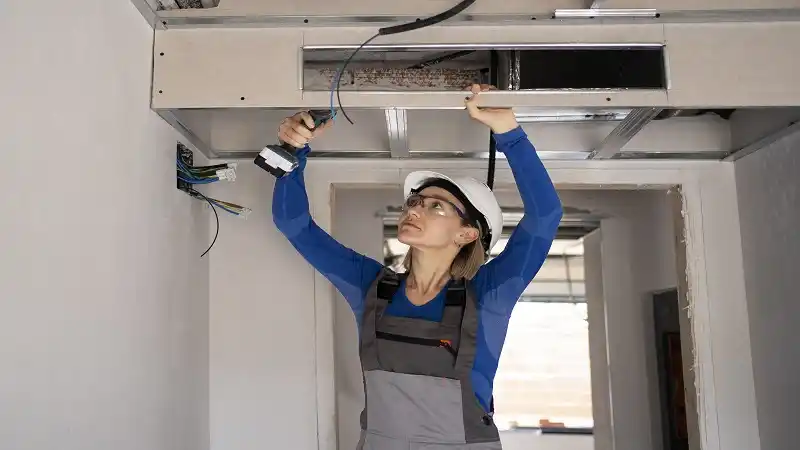
Proper airflow balance is critical to maintaining comfort, efficiency, and reliability in heating and cooling systems. When airflow is uneven, some rooms may feel too warm while others remain cool, leading to frustration and higher energy use. HVAC contractors focus on airflow balance to ensure that conditioned air reaches every space as intended. This process involves understanding how air moves through ductwork, how equipment responds to pressure changes, and how building layouts affect circulation. Achieving balanced airflow helps systems operate smoothly and supports consistent indoor comfort across residential and commercial properties.
Airflow Balance Explained
Airflow balance is the even distribution of conditioned air throughout a building, ensuring each room receives an appropriate amount based on its size and use. This article discusses how contractors evaluate airflow, adjust system components, and address common obstacles that interfere with proper circulation. It also highlights why balanced airflow matters for comfort, energy use, and long-term system performance, providing a clear picture of how these efforts contribute to healthier indoor environments.
-
Evaluating Existing Airflow Conditions
HVAC contractors begin by assessing how air currently moves through the system. This evaluation includes measuring airflow at supply and return vents, checking temperature differences between rooms, and observing how quickly spaces reach desired settings. Pressure readings inside ductwork reveal imbalances caused by restrictions or leaks. During this stage, contractors may also speak with occupants to understand comfort concerns, which often point to underlying airflow issues. People searching for HVAC services near me often encounter uneven temperatures caused by hidden imbalances. Careful evaluation enables contractors to determine whether the issue is due to duct sizing, vent placement, or equipment configuration before making adjustments.
-
Ductwork Design and Its Influence
Ductwork plays a central role in airflow balance. If ducts are undersized, oversized, or poorly routed, air may struggle to reach certain areas. Contractors review duct layouts to ensure they match the building’s requirements and the system’s capacity. Sharp bends, long runs, and disconnected sections can all disrupt airflow. Sealing leaks is another important step, as escaping air reduces pressure and affects delivery to distant rooms. By correcting duct-related issues, contractors restore proper air pathways, allowing the system to distribute air more evenly and reducing strain on fans and motors.
-
Adjusting Dampers and Vents
Dampers and vents are key tools for fine-tuning airflow. Contractors adjust these components to regulate airflow into specific rooms. In spaces with excessive airflow, dampers may be partially closed, while areas with insufficient airflow may require increased openings. This process requires careful measurement rather than guesswork, as small adjustments can have significant effects. Proper vent positioning also matters, since blocked or poorly aimed vents can disrupt circulation. Through systematic adjustments, contractors create a balanced airflow pattern that aligns with the building’s layout and usage.
-
Equipment Performance and Airflow Control
Airflow balance is closely tied to the performance of HVAC equipment. Blower speed settings, fan performance, and filter condition all influence air movement. Contractors ensure that blowers are set correctly for the system’s design and that filters are clean and properly fitted. Dirty filters restrict airflow, while incorrect fan settings can cause pressure imbalances. In some cases, upgrading components may be necessary to support proper airflow. Attention to equipment performance ensures that adjustments made elsewhere in the system produce lasting results rather than temporary improvements.
-
Building Layout and Usage Factors
Every building presents unique airflow challenges due to its layout and how spaces are used. Open floor plans, multiple levels, and additions can create uneven pressure zones. Contractors consider factors such as room orientation, ceiling height, and insulation levels when balancing airflow. Areas exposed to more sunlight or external temperature changes may require different airflow levels to maintain comfort. By accounting for these variables, contractors tailor airflow solutions that respond to real-world conditions rather than relying on generic settings.
-
Maintaining Balance Over Time
Airflow balance is not a one-time task; it requires ongoing attention as systems age and building conditions change. Contractors recommend periodic inspections to ensure that ducts remain sealed, vents stay unobstructed, and equipment continues to perform as intended. Renovations, furniture placement, and changes in occupancy can all affect airflow patterns. Regular maintenance helps identify emerging imbalances early, preventing discomfort and unnecessary energy use. This proactive approach helps maintain consistent indoor conditions and improves system reliability.
Ensuring proper airflow balance is a detailed process that combines evaluation, adjustment, and ongoing care. HVAC contractors rely on measurements, system knowledge, and building awareness to distribute air evenly throughout a space. Balanced airflow improves comfort, reduces energy waste, and supports dependable system operation. When airflow is managed effectively, heating and cooling systems perform more smoothly, creating indoor environments that feel consistent and comfortable over the long term. See more