
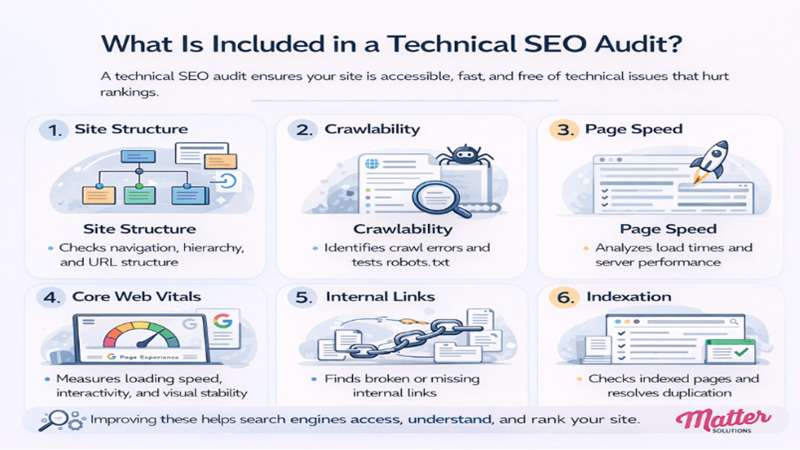
A technical SEO audit covers site structure, crawlability, page speed, Core Web Vitals, internal links, and indexation. These factors show whether Google can access, understand, and rank your site. Without them working properly, even great content will struggle to rank.
It’s also difficult to detect technical problems in these areas, like broken redirects or slow mobile speeds, on your own. Without an audit, these often sit undetected for months until rankings plateau or traffic drops.
At Matter Solutions, we’ve been running technical SEO audits for Brisbane, national, and international businesses since 2000. This guide reflects insights gathered from hundreds of audits, including what gets checked, why technical issues hurt rankings, and which fixes typically deliver the fastest impact.
Let’s start with what a technical SEO audit covers.
What Is a Technical SEO Audit?
A technical SEO audit is a structured review of your website’s technical health. It checks if search engines can properly access, crawl, and index your pages, and flags anything standing in the way.
Think of it as the foundation that allows your content, links, and keyword strategy to perform in search results. If the foundation itself is weak, your rankings suffer as well.
For example, you might discover that broken redirects are killing 40% of your link equity, or that slow server response times are tanking your Core Web Vitals scores. The audit pinpoints these specific issues, so you’re not guessing what you need to fix.
Why Technical SEO Impacts Rankings, Traffic, and Revenue
As we’ve already mentioned, search engines reward sites that are accessible, fast, and structurally clear. When technical problems interfere with that, rankings and traffic decline as well.
Here’s why getting the technical side right has such a direct impact on your results:
- Crawlability Comes First: If search engines can’t access your pages due to crawl errors or blocked URLs, those pages won’t appear in search results. Even the most well-optimised page can’t rank if Google can’t reach it.
- Rankings Control Your Traffic: Almost 97% of desktop clicks go to first-page results. If technical issues are pushing your pages down in search engine rankings, you’re losing the majority of potential visitors before they even see your site.
- Less Traffic Means Fewer Leads and Lost Revenue: When organic traffic drops, fewer visitors reach your site. That leads to fewer enquiries, fewer conversions, and revenue left on the table.
Ultimately, technical SEO isn’t separate from your broader SEO strategy. It’s what determines whether that strategy actually delivers results.
Core Areas Covered in a Technical SEO Audit
A technical SEO audit works through several interconnected areas of your site. The most important ones are:
- Site structure and internal linking
- Crawl budget and XML sitemap health
- Core Web Vitals and page experience factors
Let’s look at what each one actually checks.
Site Structure, Internal Links, and Crawl Budget
Your site’s structure explains how Google moves through your pages, and internal links are what make that navigation possible.
They guide search engines from one page to the next and help distribute ranking signals across your site. When internal linking is weak, Google can miss key pages entirely or waste crawl budget on pages that don’t need attention.
Audit focus: Your XML sitemap, crawl errors, internal linking gaps, and any pages burning through crawl budget without adding value.
Core Web Vitals and Page Experience
Core Web Vitals are a set of ranking signals Google uses to measure real user experience. They cover load speed, interactivity, and visual stability across your site.
Audit focus: which pages load slowly, shift layout unexpectedly, or respond poorly on mobile. Sorting these out improves both search rankings and the user experience.
Overlooked Technical Audit Areas Most Businesses Miss
Most technical audits catch the obvious errors, but what tends to get overlooked are the smaller, less visible issues that chip away at rankings over time, including:
- Orphaned Pages: These are pages on your site with no internal links pointing to them. Search engines can struggle to find and index orphaned pages, which means they rarely rank, even if the content on them is good.
- Thin and Duplicate Content: Thin content adds little value to users, while duplicate content across existing pages confuses Google about which version to rank. A thorough audit flags both, along with canonical tags to sort out any duplication.
- Index Bloat and Redirect Issues: Too many low-value pages in Google’s index can dilute your site’s overall authority. Redirect problems make this worse by sending users and search engines to the wrong destinations, creating indexing issues that are easy to miss without an audit.
- Duplicate Meta Tags and Missing Meta Descriptions: Meta tags and meta descriptions tell search engines what each page is about. When they’re duplicated or missing, it affects how your pages show up in search results and can hurt click-through rates.
Left unaddressed, these issues accumulate and become the reason rankings stall despite other SEO work going on elsewhere on the site.
What Comes Out of an Audit? Your Action Checklist
A completed technical SEO audit produces a prioritised action checklist. The audit documents every issue, ranks it by impact, and pairs it with a specific action.
A typical audit report covers:
| Audit Area | What Gets Flagged |
| Crawlability | Blocked pages, crawl errors, XML sitemap issues |
| Page Speed | Slow load times, Core Web Vitals failures |
| Structured Data | Missing or broken schema markup |
| Internal Linking | Orphaned pages, broken links, linking gaps |
| On-Page Optimisation | Missing meta descriptions, duplicate meta tags |
| Google Search Console | Manual actions, indexing issues, search visibility gaps |
The fixes are ranked by impact, so you know what to tackle first and where your effort will count most. For businesses without in-house technical expertise, this is where an SEO specialist steps in to interpret the findings and implement the changes.
The goal isn’t a perfect score. It’s a technically sound website that search engines can crawl, understand, and rank without running into obstacles.
How Often Should You Run SEO Audits?
It depends on your industry and how active your site is. If you’re in a competitive space, monthly or quarterly audits make sense. But for most businesses, twice a year is enough, as Semrush recommends in their SEO audit guide.
And honestly, most businesses don’t think about auditing until something goes wrong. And by then, the damage is already showing up in the numbers.
Outside of scheduled audits, certain situations demand an immediate check. For example, a website redesign, platform migration, or sudden drop in search rankings all signal potential technical problems. Run an audit after major Google algorithm updates, too, since what counts as technically compliant can shift overnight.
In between audits, you should monitor your site in Google Search Console. It flags crawl errors, indexing problems, and manual actions as they happen, so you can address them before they compound and drag down your rankings.
Is Poor Technical SEO Holding Your Website Back?
The best time to run a technical SEO audit is before problems show up in your rankings. By the time traffic drops or visibility declines, the issues have often been there for months.
Start with Google Search Console to catch crawl errors and indexing problems, then work through page speed and mobile optimisation. Each improvement strengthens your search visibility and the foundation for everything else in your SEO strategy.
If you’d rather have an experienced team handle it, get in touch with Matter Solutions. We’ll show you exactly what’s holding your site back and fix the issues costing you traffic.